


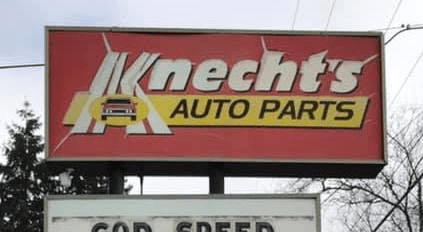
If you’ve ever looked for an air filter or spark plugs at a local shop in Oregon, chances are you’ve come across Knecht’s Auto Parts. For over 75 years, Knecht’s built a reputation as a friendly, locally owned chain supplying car parts to communities across the state. So when news broke in April 2023 that Knecht’s would soon shut its doors for good, it rattled not just car enthusiasts, but anyone who values local business.
But what happened next has left many people scratching their heads. Knecht’s made headlines for planning a full closure, yet their website today claims to operate 14 stores. If you’re a small business owner, an entrepreneur, or someone learning how companies adapt in challenging times, this story delivers practical lessons—and a few important questions.
Table of Contents
ToggleClosure Announcement Details: What We Know from April 2023
Let’s start by laying out the facts. In early April 2023, Knecht’s Auto Parts publicly announced their intention to close all of their Oregon stores. News coverage at the time made it clear: after over seven decades, the company could no longer see a financially sustainable path forward.
Company management cited dramatic shifts in the retail marketplace. Stiffer competition from national chains, the rapid growth of online parts retailers, and increased costs put too much pressure on their bottom line. “The business is no longer sustainable,” the leadership told reporters. They planned to close every location—over a dozen in total—by the end of May 2023.
Did you know? Inventory-heavy businesses such as auto parts sellers can be hit especially hard as supply chain costs rise and customers shift to online shopping. The challenge isn’t unique to Knecht’s; it’s one every small retailer must face today.
Key Takeaway: The formula is simple—if rising expenses outpace revenue, even a long-standing local company can be forced to shut down.
Impact on Employees and Store Locations
Before the closure, Knecht’s had about 35 employees on its payroll, according to local media. For any business that small, each job matters—to the employee, their family, and the local economy. The sudden news of closure meant these workers had just weeks to find new positions in a tough labor market.
So, which locations were impacted? Knecht’s operated stores in several Oregon cities, including Eugene, Springfield, Albany, Corvallis, and others. Reports referenced multiple sites set to close, but the total list hasn’t been published in full. Start by thinking about how a sudden closure in each town does more than shutter a building—it impacts both employment and the ability of local car owners to quickly source parts.
Ask yourself: If your business employs 30–40 people and you close down, what safety net do they have? This is why advance notice and transition help matter.
Conflicting Information on Current Status
Here’s where things get puzzling. Months after the end-of-May closure deadline, Knecht’s official website describes itself as “locally owned” and lists 14 Oregon stores. The website says these stores are still operating. Online listings and Google Maps also show locations for some of these stores, although recent customer reviews are mixed or sparse.
What explains this contradiction? Were all locations actually shuttered, or did some remain open with little fanfare? Did a new owner, franchise group, or investor step in? Is the brand continuing through certain stores, while others shut down as planned?
Tip: Don’t take every announcement at face value. Always check the latest company information, call specific locations, and look for recent customer feedback before assuming a business is closed.
Key Takeaway: Discrepancies between public announcements and real-world operations are more common than you might think, especially during major transitions.
Possible Reasons for Continued Operations or Restructuring
If you’re curious why Knecht’s Auto Parts might still appear to operate—even after announcing a total shutdown—here are some plausible scenarios:
- Partial Restructuring or Sale: It’s possible that although the parent company planned to close, individual stores were sold or franchised to local owners.
- Reopening Under New Management: Sometimes a buyer purchases closed locations, keeps the original name, and reopens with a leaner strategy.
- Downsizing Instead of Complete Closure: If some stores performed better financially, Knecht’s may have cut weaker locations and kept profitable ones.
- Brand Licensing: In rare cases, stores license the brand or logo while running under new ownership structures.
Start by mapping your fixed and variable costs, then ask yourself: What must happen each month to break even? If you see a path—like a store consistently turning a profit—you may decide to restructure rather than pull the plug everywhere.
Don’t forget: Small businesses can be surprisingly agile. Closing some stores doesn’t always mean the end.
Public and Community Response
Ask yourself: How do loyal customers and longtime staff react when a beloved business announces it’s closing forever? In Knecht’s case, heartfelt stories poured out on social media. Regulars posted about the helpful advice and honest pricing they got from local staff. Some even reached out, offering to help or asking management to reconsider.
Small businesses play a bigger role than just selling things—they create connections. The news of closure prompted community members to express appreciation, share memories, and organize efforts to “shop local” elsewhere. While there’s no indication of an organized campaign to “save” Knecht’s, the response underlined the key economic and emotional role these shops play.
Key Takeaway: Customer loyalty and goodwill are tremendous business assets, but they don’t always offset rising costs or industry pressures.
If your own business faces tough times, don’t underestimate the power of honest communication and sincere gratitude for your community’s support.
How to Check Knecht’s Current Status—A Practical Guide
Wondering if Knecht’s Auto Parts is still open near you? Here’s a step-by-step approach you can copy when researching any local business that’s reportedly closing:
- Start with the company’s official website. Look for current locations, hours, or press releases.
- Search recent customer reviews. Check Google, Yelp, and Facebook for activity dated within the last few months.
- Call the store directly—don’t rely solely on online info.
- Scan local news or business forums for updates, especially around the announced closure date.
If you want to do this yourself, tools like Sunrise Clicks can help you verify business listings, check digital footprints, and even see whether a company’s social media is still posting.
Tip: Never assume a store is open just because its website is live. Information sometimes lags during periods of transition.
What Entrepreneurs and Owners Can Learn From Knecht’s Story
If you own a business, study stories like Knecht’s not out of fear, but to gain useful lessons:
- Stay nimble: Watch for industry trends and adapt quickly if customer preferences or competitors shift.
- Communicate clearly: Honesty about hard times builds trust—even if you have to announce bad news.
- Have a plan for staff: Your employees are your most critical resource. Help them prepare for what’s ahead.
- Keep options open: Sometimes a downsizing or restructuring can buy time, preserve the brand, or create a path back.
Key Takeaway: It’s wise to regularly review your financial health—not just annual profits, but month-to-month cash flow—and decide where you stand.
Ask yourself: If sales dip 20% next quarter, what steps could help you remain viable? Create scenario plans now, before a crisis forces your hand.
Conclusion: Where Does Knecht’s Go From Here?
So, is Knecht’s Auto Parts out of business? Publicly, they announced in 2023 that every store would close by the end of May. News reports and insiders pointed to industry headwinds and a lack of a sustainable future for the entire chain.
Yet, recent website updates and business listings suggest 14 Knecht’s locations still claim to operate in Oregon. The public doesn’t know for sure if these stores stayed the same, changed hands, downsized, or were revived under new ownership. What’s clear is that the story isn’t as simple as a small company closing and vanishing overnight.
If you’re running a business—or thinking about starting one—look closely at Knecht’s twists and turns. Things can change fast in retail, but businesses that stay transparent, consider creative solutions, and stay close to their communities don’t always disappear when facing headwinds.
Ultimately, keep learning from examples like this. Clarify what your business needs to survive, make tough calls early, and keep your customers in the loop. As for the Oregon auto parts scene, there will always be demand for personal expertise and fast local support—even as the guides change and new models appear.
Ask yourself: If a legacy business can find a way to adapt or return after making tough decisions, what might be possible for yours, too?
Read Also This: