



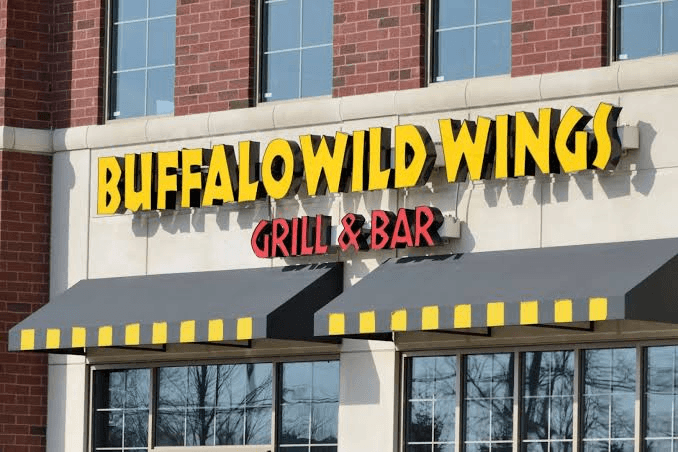
Is Buffalo Wild Wings truly on the verge of closing down? Or is there a smarter story behind those recent headlines? If you’re an aspiring entrepreneur, a small business owner, or simply someone keeping an eye on the food industry, these questions probably matter to you. Let’s break down what’s actually happening—so you can learn, spot patterns, and make better decisions for your own business along the way.
Table of Contents
ToggleCurrent Status: Buffalo Wild Wings Is Still a Major Player
Start by looking at the size and ownership of Buffalo Wild Wings (BWW). The brand remains operational across the U.S., with more than 1,300 locations as of 2025. BWW isn’t an independent operator—it’s owned by Inspire Brands, a force behind several major restaurant chains.
Inspire Brands acquired Buffalo Wild Wings in 2018 for about $2.9 billion. When a parent company puts down that kind of investment, it’s a strong vote of confidence. They’re not seeking a quick flip or a closing sale—they’re looking for long-term returns.
Key Takeaway: Don’t let headlines fool you. BWW is still a substantial chain, with support from a well-resourced parent committed to the restaurant space.
The Headlines: Closures Are Real, But Not a Sign of Immediate Collapse
You might see stories about Buffalo Wild Wings restaurants closing across various U.S. cities. Yes, this is happening. But is it a full collapse? Far from it.
Here’s what the numbers say:
– At the end of 2025, BWW had 1,178 full-service U.S. restaurants. That’s a net decline of 5 units for the year.
– Since 2018, the brand has reported negative net unit growth. More stores have closed than opened.
Ask yourself: If you’re running a chain with hundreds or thousands of locations, how do you know when it’s time to close one? Start by mapping store-specific performance. If a location consistently underperforms, drains management focus, or faces big lease hikes, closing it might be the smartest option.
Prompt reflection: Have you considered killing a weak product or location to strengthen your entire business? Sometimes, subtraction adds value.
Why the Closures? Practical Factors Driving Change
Buffalo Wild Wings isn’t closing shops out of boredom or bad management. These closures happen because of concrete pressures that nearly every restaurant owner can relate to.
Here’s what’s at play:
– **Rising Costs**: Food prices have climbed, labor costs are up, and utility bills aren’t getting cheaper. If your costs go up but sales don’t, profit margins get squeezed.
– **Changing Consumer Habits**: After the pandemic, more customers prefer takeout or delivery rather than sitting down in a sports bar.
– **Local Economics**: In places like Ann Arbor, MI (where the State Street store just closed), local management called out “broader economic challenges”—including lower discretionary spending.
Tip: Always know your break-even number. If monthly costs outpace sales for too long, even well-loved brands will close weak locations.
Examples: Which Locations Have Closed?
Recent years have featured a consistent pattern of isolated but high-visibility closures. A few examples from 2025 and 2026:
– Ann Arbor, MI (State Street location closed in May 2026)
– Lawrence, KS (sole city store on Iowa Street shut down)
– Crystal City, VA and Ballston, VA (both long-standing sports bars gone)
– Hicksville, NY (an anchor of Broadway Commons, now replaced with a takeout format)
– McHenry, IL and Racine, WI (store closures and demolitions reported)
These closures aren’t random. They tend to target underperforming stores, locations with tough leases, or units failing to adapt to changing traffic.
Key Takeaway: Don’t panic when you see cluster closures—instead, look for the pattern and the reason behind each decision.
The Strategic Shift: Enter Buffalo Wild Wings Go
The formula is simple: When dine-in traffic declines, and takeout rises, pivot to formats that meet new demands. That’s where “Buffalo Wild Wings Go” enters the scene.
BWW Go outlets are smaller. They rely on takeout and delivery, skipping large dining rooms and big-screen TVs. As of 2026, the company projects more than 90 new Go-format openings. Some reports even hint at an extra 50 planned within a single year.
What does this mean for other business owners? If your market shifts, follow the customer. BWW is betting that today’s consumer wants wings fast, probably at home, and isn’t coming in to watch as many games on weeknights.
Tip: If you’re adding a new revenue stream, test it with a small-format location or a delivery-only kitchen before betting the entire farm.
Economic Headwinds: Adapting to Broader Challenges
Every food and beverage entrepreneur faces rising costs right now. BWW is no exception. Locations that close regularly cite:
– **Increased labor costs**: Minimum wage laws, competition for hourly workers, and higher benefit costs all add pressure.
– **Inflation in ingredient prices**: Chicken, in particular, went through price spikes in recent years.
– **Weaker discretionary spending**: When the economy tightens up, fewer people splurge on sports bar meals or extra beer rounds.
Ask yourself: Do you have a plan if your biggest cost category spikes by 10%? Build flexibility into your model—buffer room and a willingness to adjust menu or service formats.
Customer Preferences: The Takeout Trend Is Here to Stay
Since 2020, dining habits have changed in ways that probably won’t reverse soon. More than one-third of Buffalo Wild Wings’ total sales now come from takeout and delivery. The Go format isn’t just a side experiment—it’s BWW’s new growth engine.
If your customers want speed, convenience, and flexibility, offer it—don’t force old patterns just because they worked in the past.
Checklist for adapting to changing consumer trends:
– Survey your own customer base. Are they asking for off-premise options?
– Experiment with small-format or digital-first concepts.
– Monitor sales mix monthly—see if dine-in, takeout, or delivery is trending up or down.
– Train staff for speed and accuracy; digital orders won’t forgive mistakes.
Did you know? Some of the most successful food chains today have less real estate and more app-based sales than ever before.
Growth Plans: Closures Don’t Mean Giving Up
It’s wise to read company filings and projections before making big assumptions. Buffalo Wild Wings still intends to open new locations—just not with the same formula as before.
Their 2026 Franchise Disclosure Document projects:
– 16 new franchise (mostly Go-format) openings
– No new company-owned full-sized sports bars planned
The company’s focus has shifted: Close underperforming, oversized units, and launch smaller, takeout-first outlets. Management is betting that streamlined operations and lower overhead will keep the brand nimble and relevant.
Key Takeaway: Scaling down the old doesn’t mean failing. It often means adapting so you can scale up again—just smarter.
Should You Worry? What This Means for Aspiring Entrepreneurs
If you’re running a food business or exploring the sector, what should you learn from BWW’s moves?
– Don’t confuse a wave of closures with total business failure. Look for pivots and new launches.
– Watch for trends in consumer preference—then adjust fast. Don’t wait until every customer leaves before you adapt.
– Analyze underperformance honestly. It’s hard to shut a location, but clinging to money-losers just drains resources.
– Stay nimble. Sometimes, less space and a simplified product wins the race.
Tip: If you see a big brand betting on new formats, there’s usually a reason. Consider if similar shifts make sense in your industry.
Is Buffalo Wild Wings Going Out of Business? The Straight Answer
Let’s settle this clearly: There is zero evidence that Buffalo Wild Wings plans a full shutdown, liquidation, or disappearance from the American dining scene. The chain is large. It’s visible. It’s very much open for business—just in a different way.
But you are seeing:
– Year-over-year closures of traditional sports bars in multiple states
– A multi-year pattern of slimming down and recalibrating footprints
– Major investment in smaller, more efficient, takeout-driven stores
So, the truth isn’t “Buffalo Wild Wings is going out of business.” It’s “Buffalo Wild Wings is restructuring to fit the market—downsizing old models, investing in new ones.” If your business faces comparable conditions, consider a similar approach. Cut what isn’t working. Double down on what is.
Before you react to headlines, ask yourself: Is this a crisis, or is it an evolution?
Questions? Looking for actionable business insights, models, and practical tips? You might find useful tools at this resource.
Final Thoughts: Transformation, Not Termination
Your key lesson? Adaptation beats stagnation. Even big, beloved brands like Buffalo Wild Wings are not immune to changing consumer tastes, fluctuating costs, and industry pressure. What sets them apart is willingness to face reality, test new approaches, and shift investment toward what’s working.
If you’re an entrepreneur, use this as encouragement. Study market shifts. Have the courage to close what’s not viable. Lean into new formats, channels, and partnerships where demand is heading.
Key Takeaway: Growth doesn’t always come from doing more of what you’ve done—it often comes from doing what your customer wants today.
The story of Buffalo Wild Wings is not of failure, but focus. In the end, smart business isn’t about nostalgia—it’s about staying relevant and profitable, no matter what.
Read Also This: